

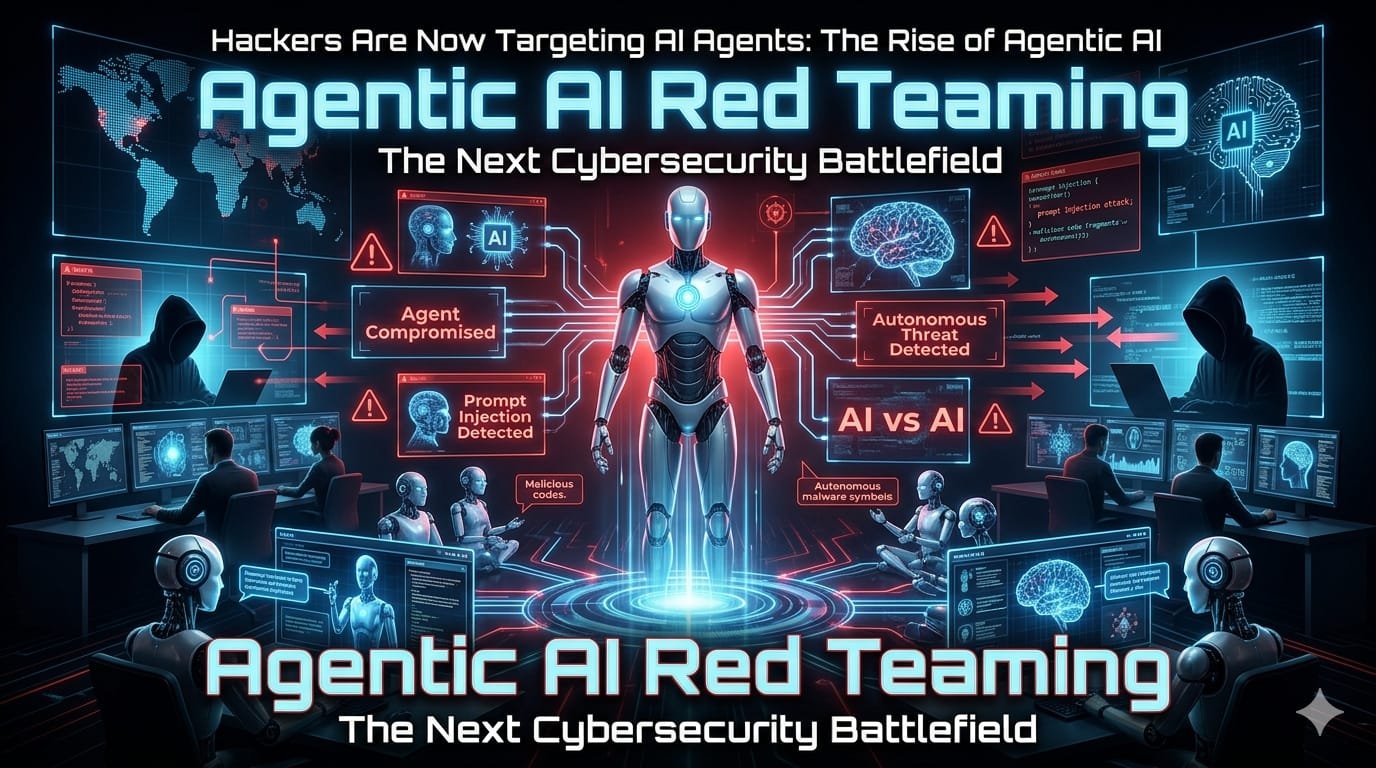
Artificial Intelligence is evolving faster than cybersecurity can adapt.
What started as simple AI chatbots and coding assistants is rapidly transforming into something far more powerful — autonomous AI agents capable of making decisions, using tools, accessing systems, and performing complex tasks without constant human supervision.
But security researchers are now warning of a dangerous new reality:
AI agents themselves are becoming attack surfaces.
This has given rise to one of the fastest-growing cybersecurity fields of the next decade:
“Agentic AI Red Teaming”
Security experts predict that from 2026 onward, organizations worldwide will invest heavily in securing:
- AI agents
- Autonomous systems
- Tool-using LLMs
- Multi-agent AI ecosystems
- AI workflow automation platforms
The cybersecurity battlefield is no longer just human vs hacker.
It is becoming:
AI vs AI.
What Is Agentic AI?
Traditional AI models simply respond to prompts.
Agentic AI goes much further.
These systems can:
- Make autonomous decisions
- Use browsers and APIs
- Write and execute code
- Access databases
- Interact with software tools
- Perform multi-step reasoning
- Collaborate with other AI agents
- Operate continuously with minimal human input
Modern AI agents are already being integrated into:
- Enterprise workflows
- Cloud infrastructure
- Customer support systems
- Software development pipelines
- Security operations centers (SOCs)
- Financial automation systems
- Research platforms
This marks a massive technological shift.
But with more autonomy comes significantly more risk.
Why Security Researchers Are Alarmed
Cybersecurity experts are now realizing that AI agents behave very differently from traditional software systems.
Unlike normal applications, autonomous AI systems can:
- Take unexpected actions
- Chain decisions together dynamically
- Interact with external environments
- Learn from context
- Access sensitive tools
- Coordinate with other agents
This creates entirely new attack surfaces.
Researchers warn that if these systems are compromised, attackers may manipulate AI agents into:
- Leaking confidential data
- Executing malicious code
- Escalating privileges
- Spreading misinformation
- Accessing restricted systems
- Performing unauthorized actions autonomously
The threat landscape is expanding rapidly.
What Is Agentic AI Red Teaming?
Agentic AI Red Teaming is the practice of simulating attacks against autonomous AI systems to identify vulnerabilities, unsafe behaviors, and exploitation paths before real attackers do.
Researchers test how AI agents respond under adversarial conditions such as:
- Prompt injection attacks
- Tool abuse
- Goal manipulation
- Memory poisoning
- Autonomous privilege escalation
- Multi-agent manipulation
- Data exfiltration
- Unsafe decision-making
- Recursive autonomous actions
The objective is simple:
Understand how autonomous AI systems can fail, be manipulated, or become weaponized.
This field combines:
- Offensive cybersecurity
- AI safety research
- Adversarial machine learning
- Threat modeling
- Red teaming methodologies
And it is becoming one of the hottest areas in modern cybersecurity.
AI Agents Are Becoming Powerful — and Dangerous
The next generation of AI systems is no longer passive.
AI agents can now:
- browse the internet
- send emails
- analyze documents
- manage workflows
- interact with cloud environments
- execute tasks automatically
Some advanced systems can even collaborate with other agents to solve problems autonomously.
Researchers fear attackers may eventually exploit these capabilities for:
- autonomous cyberattacks
- AI-driven reconnaissance
- intelligent phishing campaigns
- malware automation
- system manipulation
- large-scale data theft
This is why cybersecurity teams are rapidly shifting focus toward securing AI behavior — not just infrastructure.
The Biggest Security Risks in Agentic AI
1. Prompt Injection Attacks
One of the most dangerous threats involves hidden malicious instructions embedded inside:
- emails
- PDFs
- websites
- API responses
- third-party tools
A manipulated prompt could trick an AI agent into:
- ignoring security policies
- revealing sensitive information
- executing unintended commands
- accessing restricted resources
Prompt injection is quickly becoming the “SQL injection” of the AI era.
2. Tool-Using LLM Exploitation
Modern AI agents can use tools such as:
- browsers
- terminals
- APIs
- databases
- cloud dashboards
- file systems
If compromised, attackers may weaponize these tools for:
- privilege escalation
- reconnaissance
- malware deployment
- data exfiltration
- lateral movement
The danger increases as AI systems gain more permissions and autonomy.
3. Multi-Agent Manipulation
Researchers are now studying how AI agents interact with each other.
In multi-agent environments, attackers may attempt:
- agent-to-agent deception
- malicious coordination
- cascading compromise
- trust exploitation
- autonomous attack propagation
A single compromised agent could potentially manipulate an entire AI ecosystem.
4. Memory Poisoning
Many autonomous AI systems maintain long-term memory to improve reasoning and context awareness.
Attackers may poison this memory with:
- hidden malicious instructions
- false historical context
- manipulated data
- deceptive objectives
Over time, this may influence future AI decisions and behaviors.
Why This Field Will Explode After 2026
Experts believe Agentic AI Red Teaming will become a major cybersecurity industry because:
AI adoption is accelerating rapidly
Companies worldwide are deploying AI agents into business operations.
AI regulations are increasing
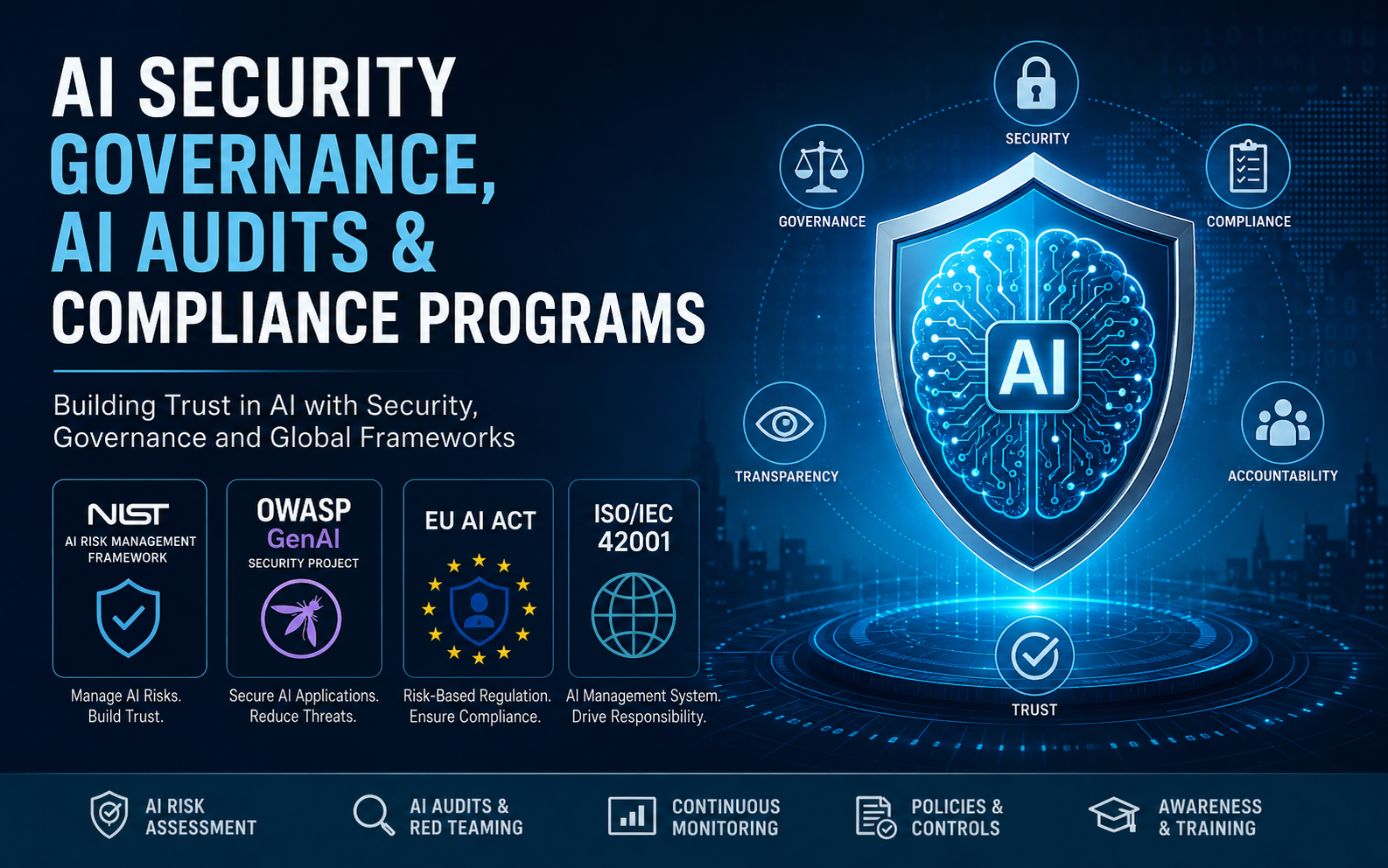
Governments are introducing AI governance and compliance frameworks.
Enterprises need AI risk assessments
Organizations must validate the security of autonomous systems before deployment.
Traditional pentesting is no longer enough
Security teams now need to test:
- AI reasoning
- autonomous behavior
- decision-making systems
- tool interactions
- multi-agent environments
This requires entirely new security methodologies.
The Future of Cybersecurity Is Changing
The cybersecurity industry is entering a new era where security professionals may need to defend against:
- autonomous AI malware
- AI-generated exploits
- intelligent phishing agents
- self-operating attack systems
- AI-driven reconnaissance bots
Future SOC teams may eventually include:
- AI security analysts
- AI threat hunters
- autonomous defense agents
- AI governance specialists
- LLM security engineers
This shift is already beginning.
AI vs AI: The Next Cybersecurity Battlefield
Security researchers predict that future cyber warfare may involve:
- AI attacking systems autonomously
- defensive AI detecting malicious AI behavior
- AI agents fighting other AI agents in real time
This could fundamentally transform:
- penetration testing
- SOC operations
- threat intelligence
- malware analysis
- incident response
The race between offensive AI and defensive AI has officially started.
New Career Opportunities in Agentic AI Security
The rise of autonomous AI systems is expected to create massive demand for professionals skilled in:
- AI Red Teaming
- LLM Security
- Prompt Injection Testing
- AI Threat Modeling
- Adversarial Machine Learning
- AI Governance
- Autonomous System Security
- AI Risk Assessment
This field combines:
- cybersecurity
- machine learning
- offensive security
- behavioral analysis
- AI safety research
Professionals with both AI and cybersecurity expertise may become some of the most valuable specialists in the industry.
Skills Needed to Enter This Field
Researchers and cybersecurity professionals should begin learning:
Cybersecurity
- web security
- cloud security
- threat modeling
- malware analysis
- SOC operations
AI & LLM Security
- AI agents
- prompt engineering
- adversarial AI
- LLM architectures
- vector databases
- multi-agent systems
Offensive Security
- prompt injection
- AI jailbreaking
- tool abuse testing
- exploit simulation
- AI red teaming
The demand for these skills is expected to grow significantly over the next few years.
Why This Matters for Businesses
Organizations deploying AI systems should understand:
Every autonomous AI agent can become a potential cyberattack surface.
Security teams should implement:
- AI access controls
- sandboxed execution environments
- human approval checkpoints
- behavioral monitoring
- tool permission restrictions
- continuous AI red teaming
- memory isolation mechanisms
Ignoring AI security risks today could create major vulnerabilities tomorrow.
Final Thoughts
The rise of Agentic AI may become one of the most important technological shifts of the decade.
But as AI systems become more autonomous, the cybersecurity risks become exponentially more complex.
Agentic AI Red Teaming is emerging as a critical defense strategy designed to secure intelligent systems before attackers weaponize them at scale.
The future of cybersecurity will not focus only on protecting networks and applications.
It will focus on securing intelligent autonomous entities capable of reasoning, acting, and making decisions independently.
And that future has already begun.
Keywords:
AI Red Teaming, Agentic AI, AI Agents, Autonomous AI Security, Prompt Injection, LLM Security, AI Cybersecurity, AI Threat Intelligence, Multi-Agent Systems, Autonomous Malware, AI Governance, Offensive AI Security, AI Pentesting, AI Risk Assessment, Future Cybersecurity Trends
Leave a Reply