

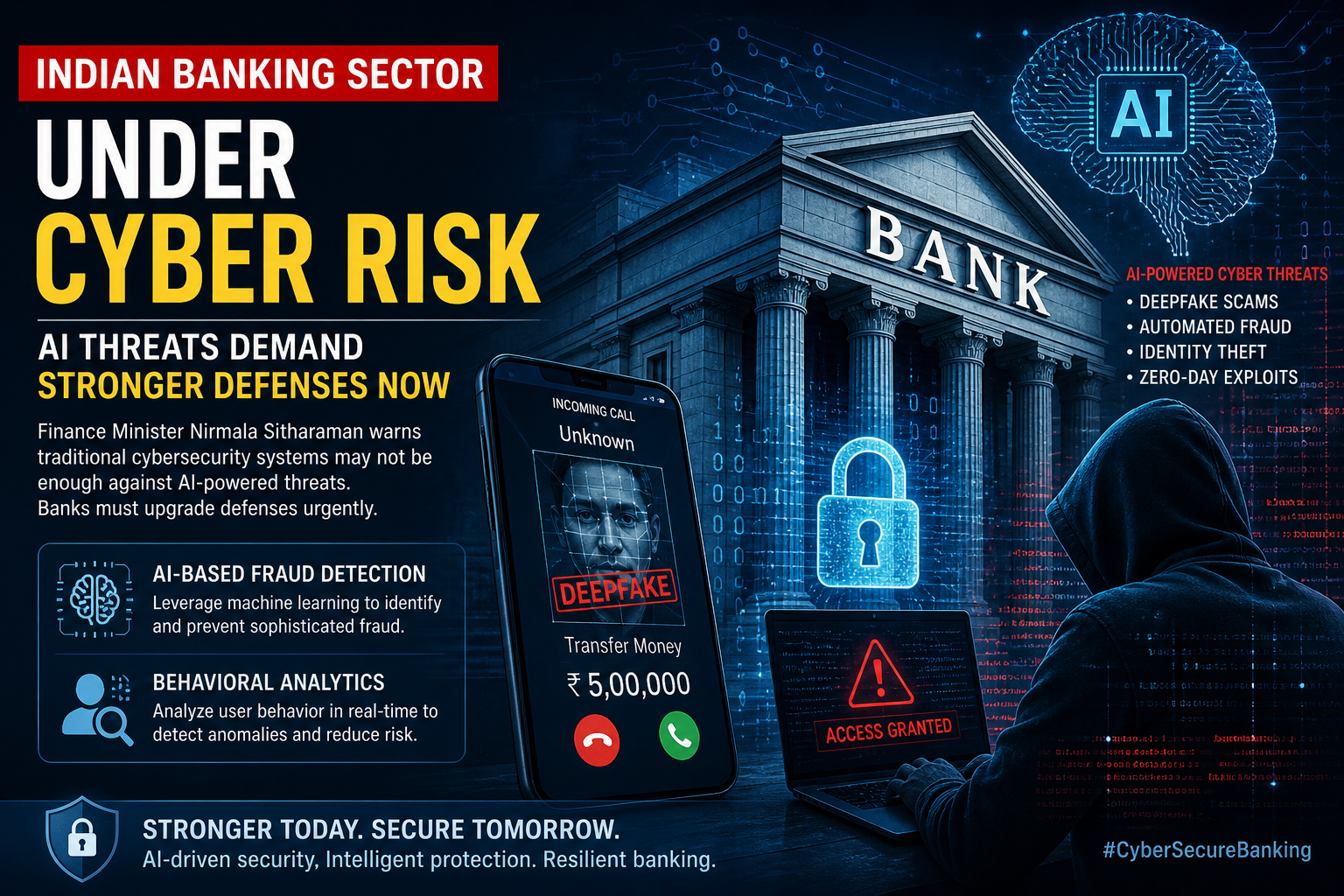
India’s banking sector is entering a critical phase as emerging artificial intelligence (AI)-driven cyber threats begin to challenge traditional security frameworks. Union Finance Minister Nirmala Sitharaman has issued a strong warning, emphasizing that existing cybersecurity systems may no longer be sufficient to defend against next-generation attacks.
⚠️ Government Raises Alarm Over AI Cyber Threats
In a recent high-level meeting involving key stakeholders such as the Reserve Bank of India (RBI), NPCI, CERT-In, and major banks, the Finance Minister stressed that advanced AI models are transforming cyber threats into a more complex and less understood challenge. (ETEnterpriseai.com)
She highlighted that while Indian banks have maintained strong cybersecurity records over the years, “existing safeguards may not be sufficient” against emerging AI-driven risks. (Moneycontrol)
The government has urged banks to:
- Strengthen IT infrastructure and customer data protection
- Establish real-time threat intelligence sharing
- Collaborate closely with CERT-In and regulatory bodies
- Report cyber incidents proactively (ETEnterpriseai.com)
🤖 Why Traditional Cybersecurity Is No Longer Enough
Traditional cybersecurity systems are designed to detect known threats and predefined attack patterns. However, AI-powered cyberattacks are:
- Adaptive and self-learning
- Capable of identifying zero-day vulnerabilities
- Able to automate phishing, malware creation, and exploitation
The Finance Minister emphasized that AI-driven threats are fundamentally different from past cyber risks, requiring a more versatile and proactive defense strategy. (Moneycontrol)
💣 Financial Sector: A Prime Target
The banking ecosystem—handling high-value transactions, sensitive financial data, and national economic stability—has become a prime target for cybercriminals.
Recent discussions highlight that AI-powered fraud, identity manipulation, and cyberattacks are rising rapidly, posing a serious challenge to traditional controls. (India Today)
Key Emerging Threats:
- AI-enabled financial fraud
- Deepfake-based scams (voice/video impersonation)
- Automated account takeovers
- Intelligent malware targeting banking systems
🔐 Cyber Insight (SECUTAS Perspective)
🚨 1. Shift to AI vs AI Cyber Warfare
Cybersecurity is evolving into a battle between offensive AI and defensive AI, reducing the effectiveness of static, rule-based systems.
🧠 2. Need for AI-Based Fraud Detection
Banks must adopt:
- Machine learning-based anomaly detection
- Real-time transaction monitoring
- AI-driven threat intelligence
📊 3. Behavioral Analytics is Critical
Behavioral profiling helps detect:
- Insider threats
- Fraudulent activity patterns
- Account compromise attempts
🔄 4. Real-Time Threat Intelligence Sharing
The government has emphasized coordinated response mechanisms between:
- Banks
- CERT-In
- Regulatory authorities (ETEnterpriseai.com)
🛡️ What Banks Must Do Next
To stay resilient, Indian banks must:
- Invest in AI-powered cybersecurity infrastructure
- Enhance SOC (Security Operations Center) capabilities
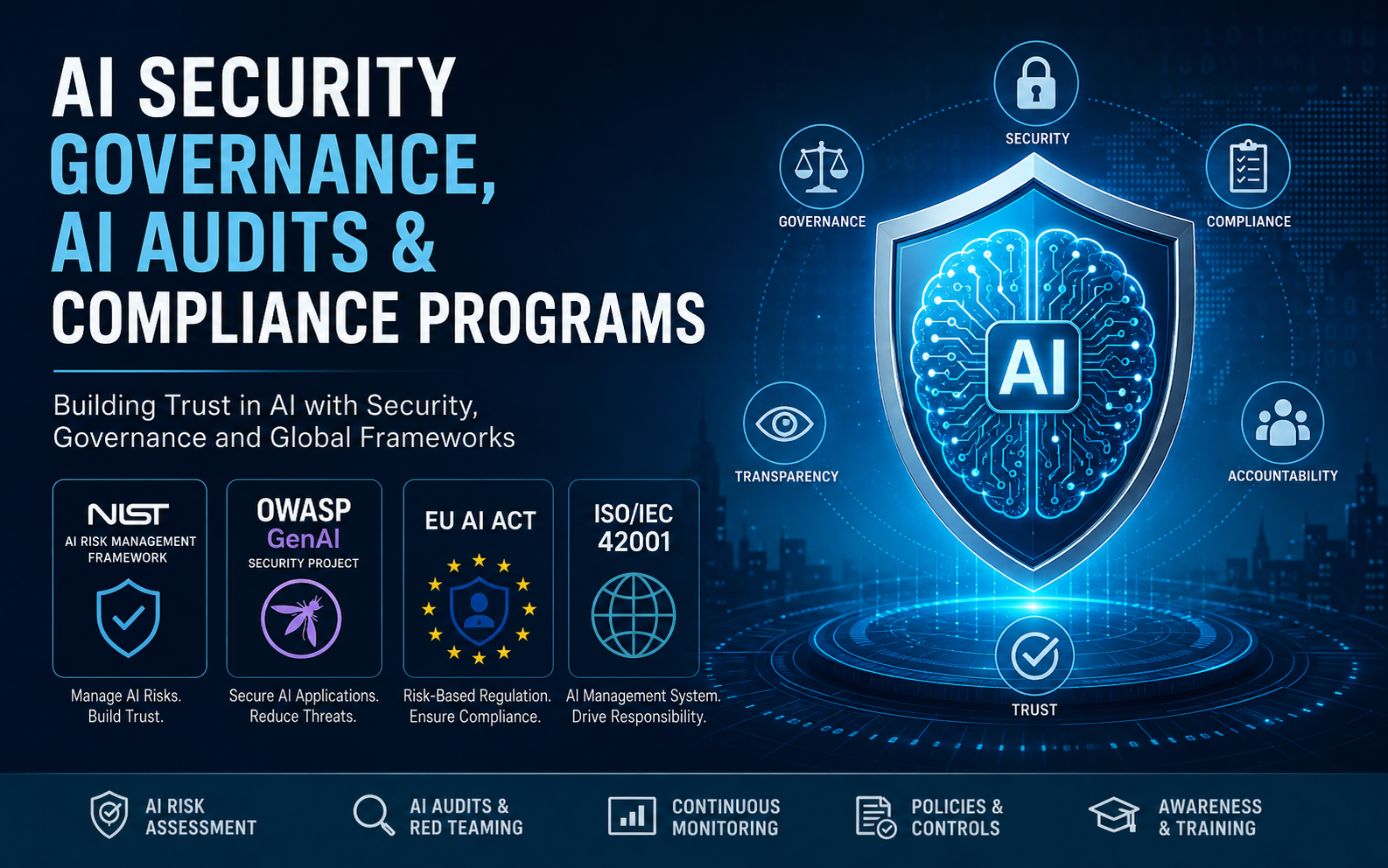
- Conduct continuous risk assessments and red teaming
- Strengthen GRC frameworks for AI risk governance
📌 Conclusion
The warning from Nirmala Sitharaman signals a major shift:
👉 Cybersecurity in banking is no longer just a technical issue—it is a national financial security priority.
As AI reshapes both innovation and risk, Indian banks must transition from reactive defense to proactive, intelligence-driven cybersecurity models.
📚 Sources
- (Moneycontrol) – Moneycontrol: AI threats warning to banks
- (ETEnterpriseai.com) – Economic Times (Enterprise AI): Govt meeting & directives
- (The Economic Times) – Economic Times: Need for proactive AI defense
- (India Today) – India Today: Rising AI-linked fraud & cyber risks
Leave a Reply