

Description
Risk Treatment Plan
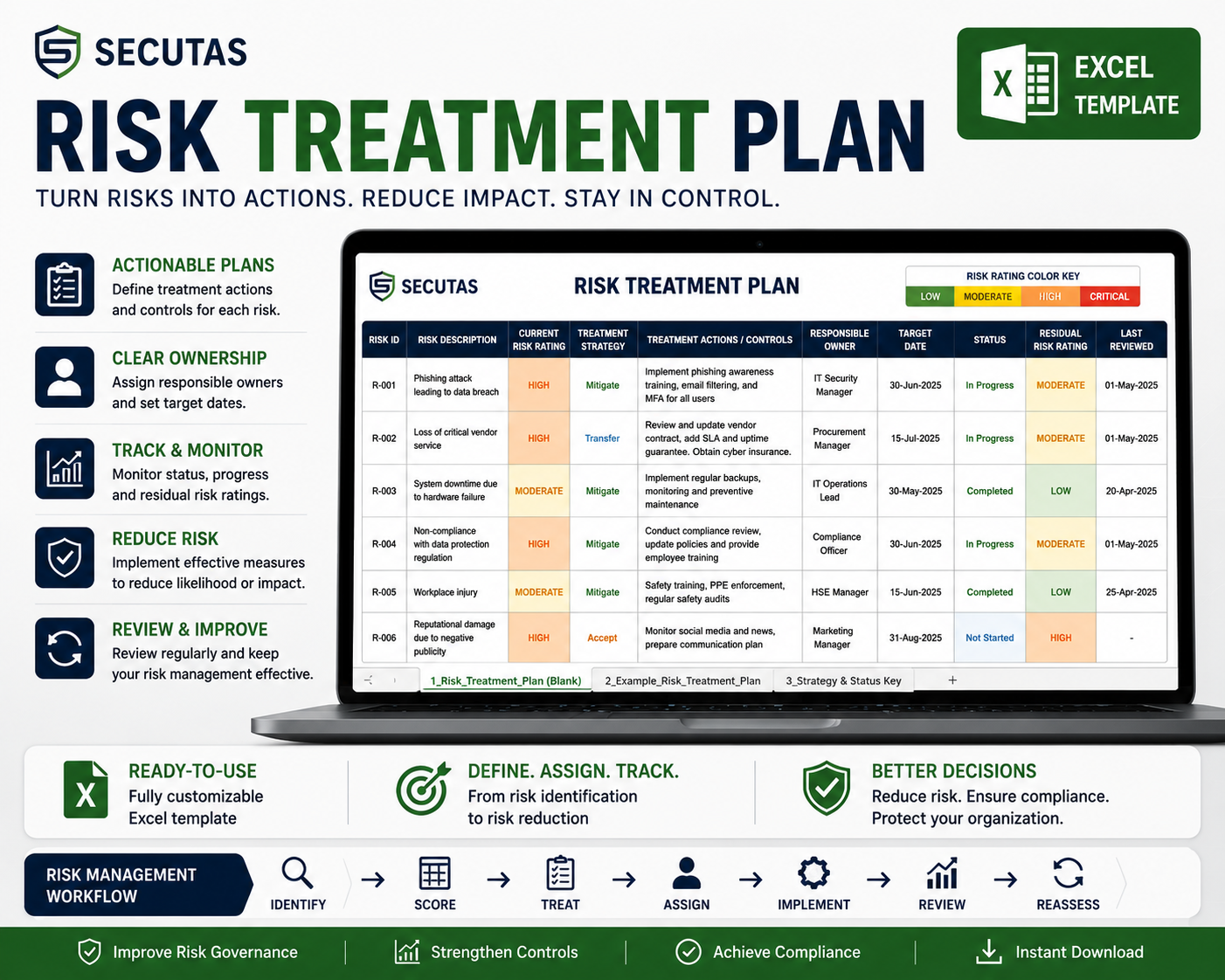
Turn identified and scored risks into concrete, trackable treatment actions with the Secutas Risk Treatment Plan.
This ready-to-use Excel template helps GRC and risk professionals select an appropriate treatment strategy, define controls and actions, assign ownership, set deadlines, track progress, and record the residual risk remaining after treatment.
What’s Included
1. Blank Risk Treatment Plan
A structured worksheet for documenting:
- Risk ID
- Risk Description
- Current Risk Rating
- Treatment Strategy
- Treatment Actions / Controls
- Resources Required
- Responsible Owner
- Target Completion Date
- Status
- Residual Risk Rating
- Last Reviewed
2. Example Risk Treatment Plan
Includes practical examples demonstrating how different risks can be treated using Mitigate, Accept, and Transfer strategies, with defined actions, owners, resources, deadlines, status, and residual ratings.
3. Strategy & Status Key
Provides clear definitions for four treatment strategies:
- Avoid — Eliminate the risk by changing plans or removing its source.
- Mitigate — Reduce likelihood or impact through controls and safeguards.
- Transfer — Shift the risk or financial consequence to a third party.
- Accept — Acknowledge the risk when immediate treatment is not justified.
It also includes status definitions for Not Started, In Progress, Completed, Overdue, and On Hold.
4. Designed for Risk Lifecycle Management
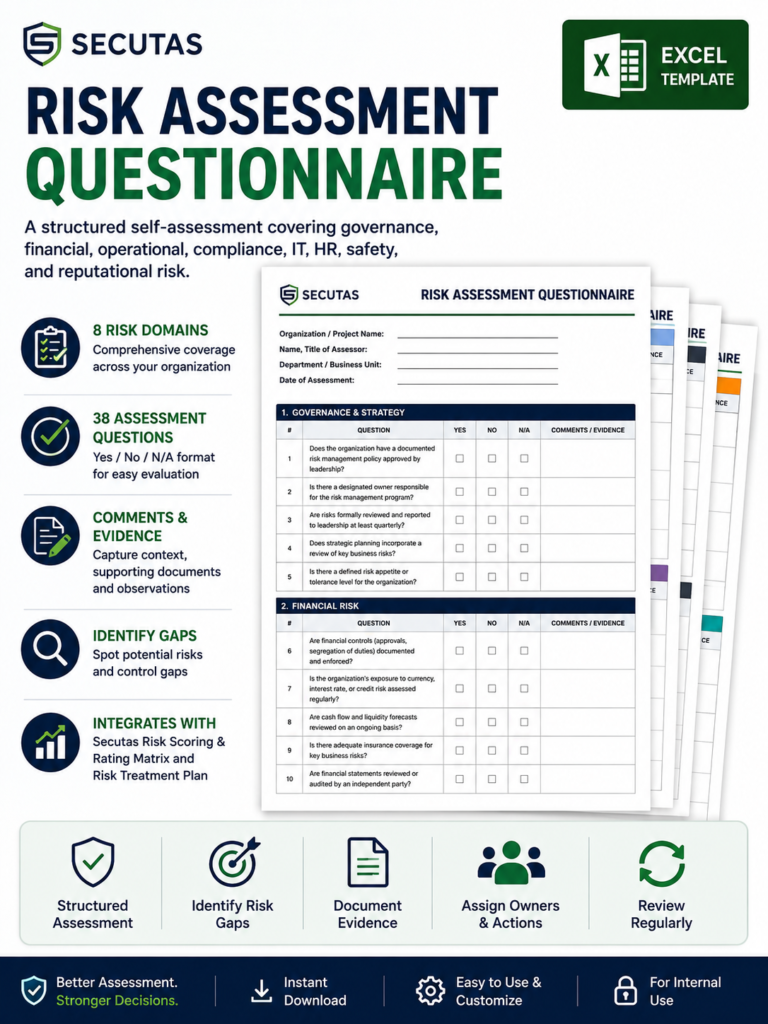
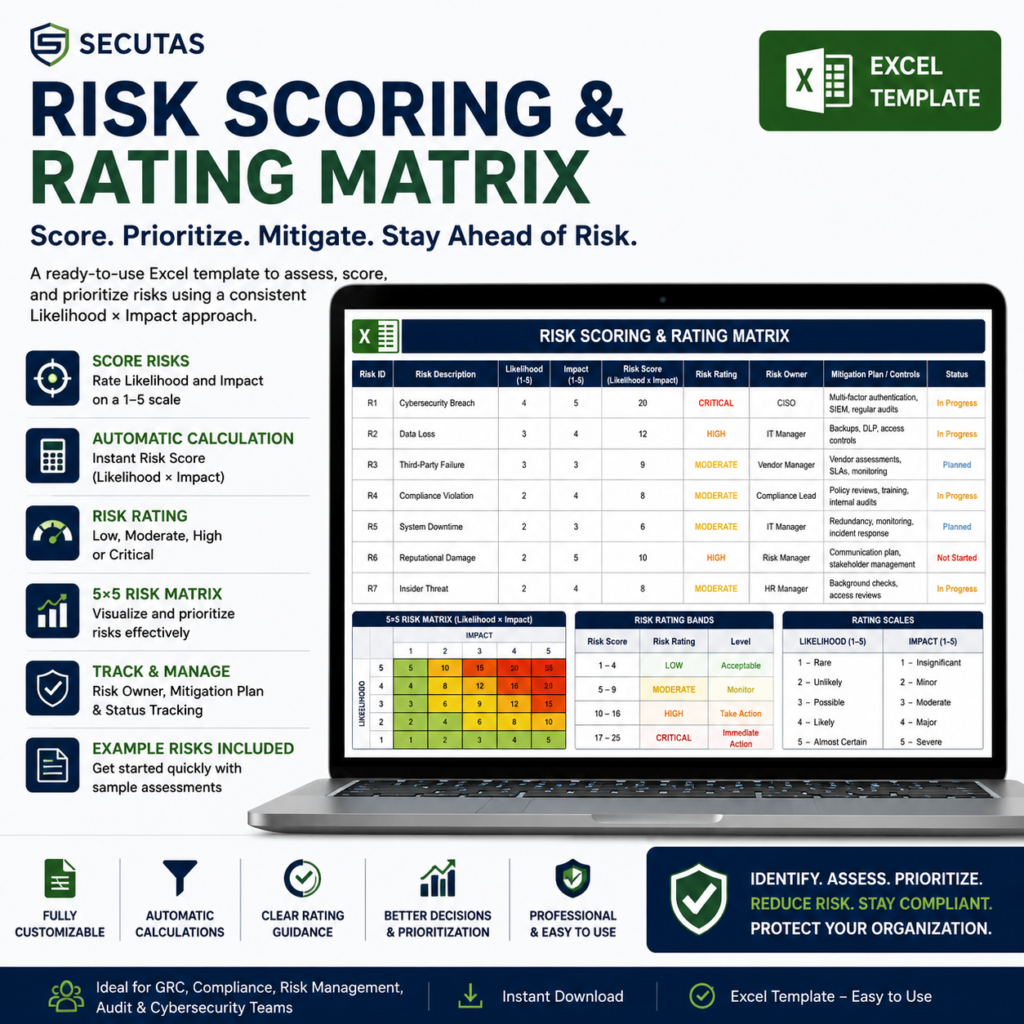
Use the template after risk identification and scoring to move from “What are our risks?” to “What are we doing about them?”
The workflow supports:
Identify → Score → Treat → Assign → Implement → Review → Reassess
Ideal For
- GRC professionals
- Risk managers
- Cybersecurity teams
- Compliance teams
- Internal auditors
- Risk consultants
- Business and process owners
- Organizations building structured risk management processes
Key Benefits
- Convert risk assessments into actionable treatment plans
- Establish clear risk ownership and accountability
- Track treatment deadlines and status
- Document controls and required resources
- Compare current and residual risk ratings
- Standardize treatment strategies across risk areas
- Support regular risk review and monitoring
From risk identification to risk reduction — create a clear action plan for every priority risk.
Reviews
There are no reviews yet.