

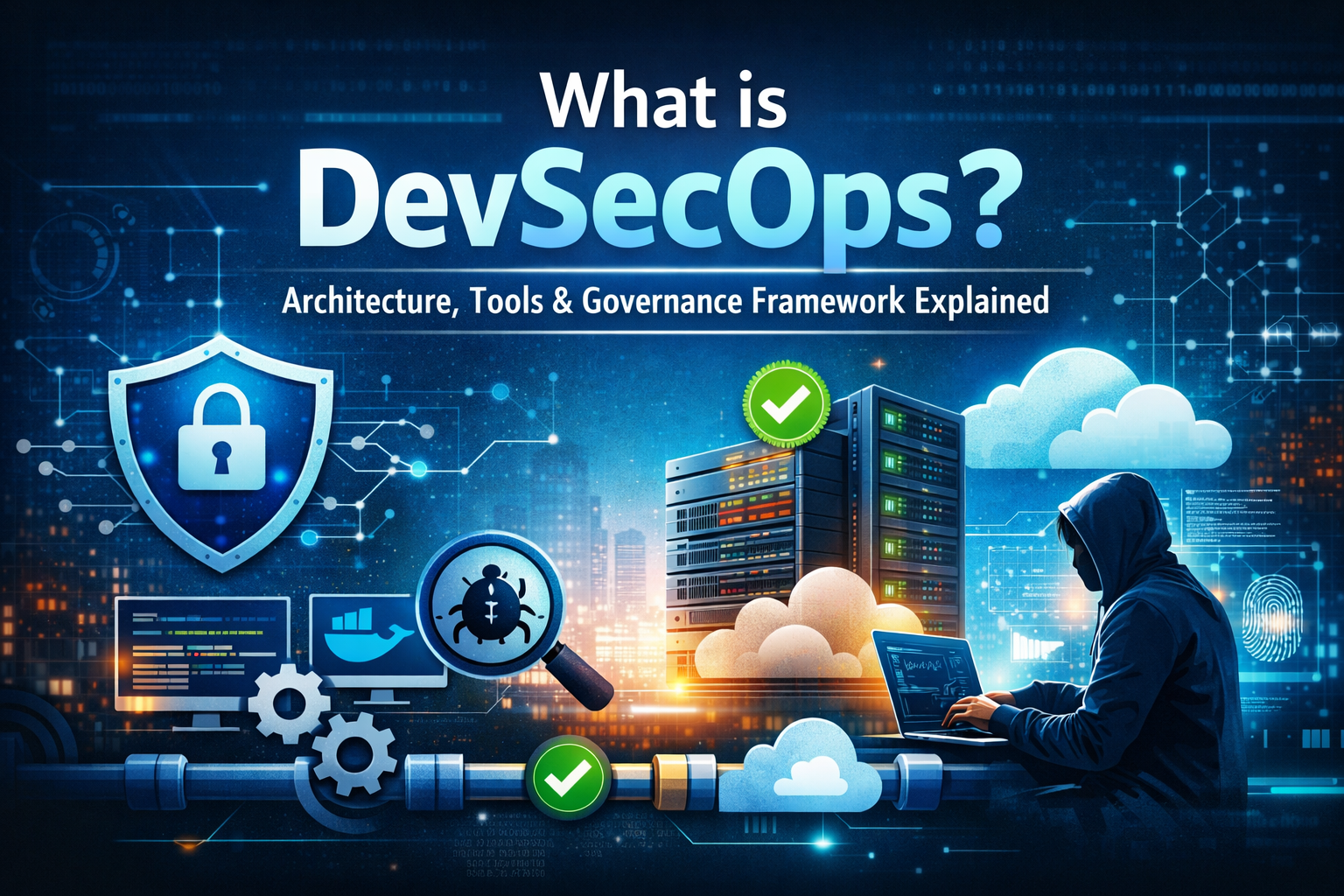
DevSecOps (Development, Security, and Operations) is a modern cybersecurity and software engineering approach that integrates security directly into the DevOps lifecycle. Instead of treating security as a final testing phase before deployment, DevSecOps embeds automated security controls throughout planning, coding, building, testing, deployment, and monitoring. This continuous security integration ensures vulnerabilities are identified early, risks are minimized, and compliance requirements are consistently enforced.
In today’s digital landscape—where organizations deploy code multiple times per day and cyber threats evolve rapidly—traditional security models are no longer sufficient. DevSecOps addresses this gap by combining automation, governance, and risk-based security engineering into a unified framework.
Why DevSecOps is Critical in Modern Software Development
Traditional Software Development Life Cycle (SDLC) models relied on sequential phases where security testing occurred near the end of development. This approach created significant risks. Vulnerabilities discovered late in the process were expensive to remediate, often delaying releases and increasing operational costs.
With the adoption of Agile and DevOps methodologies, software delivery accelerated. Continuous Integration and Continuous Deployment (CI/CD) pipelines enabled rapid iteration and frequent releases. However, security processes did not evolve at the same speed. This misalignment resulted in increased attack surfaces, especially in cloud-native and microservices environments.
DevSecOps solves this problem by introducing “shift-left security,” meaning security validation begins during design and development rather than after deployment. By embedding security into the CI/CD pipeline, organizations reduce remediation costs, improve software resilience, and maintain continuous compliance.
DevOps vs DevSecOps: Understanding the Difference
DevOps focuses on collaboration between development and operations teams to deliver software faster and more reliably. While DevOps improves efficiency, it does not inherently address security risks.
DevSecOps expands the DevOps model by making security a shared responsibility across development, security, and operations teams. Instead of relying on periodic audits or manual reviews, DevSecOps automates security testing, enforces policy-as-code, and integrates risk-based prioritization into release cycles.
The result is proactive security engineering rather than reactive vulnerability management.
Core Principles of DevSecOps
DevSecOps operates on several foundational principles that ensure security is embedded throughout the software lifecycle.
Shift-left security ensures vulnerabilities are detected early during coding and design phases. Automation-first thinking replaces manual security checks with scalable, automated testing tools. Policy-as-code transforms governance requirements into enforceable pipeline controls. Continuous monitoring ensures that security extends beyond deployment into runtime environments. Risk-based prioritization ensures remediation efforts focus on vulnerabilities with the highest business impact. Finally, shared responsibility promotes collaboration among developers, security engineers, and operations teams.
Together, these principles transform security into an engineering discipline integrated within software delivery.
DevSecOps Architecture Explained
A mature DevSecOps architecture integrates security controls at every stage of the CI/CD pipeline.
During the planning phase, organizations conduct threat modeling exercises such as STRIDE or PASTA to identify potential attack vectors. Secure design validation ensures architecture decisions align with risk management objectives.
At the code stage, version control systems enforce branch protection rules, signed commits, and secrets scanning to prevent credential leaks. Static Application Security Testing (SAST) tools analyze source code to detect vulnerabilities before compilation.
During the build process, Software Composition Analysis (SCA) tools scan open-source dependencies to identify known Common Vulnerabilities and Exposures (CVEs). Container images are scanned for misconfigurations and insecure base images. Infrastructure as Code (IaC) security tools validate Terraform or CloudFormation templates to prevent cloud misconfigurations before deployment.
In staging environments, Dynamic Application Security Testing (DAST) tools simulate real-world attacks to identify runtime vulnerabilities. Once deployed, runtime monitoring systems such as SIEM platforms collect logs, detect anomalies, and generate alerts.
This layered architecture ensures security validation is continuous rather than episodic.
DevSecOps Tools Ecosystem
The DevSecOps ecosystem includes multiple categories of security tools that integrate into CI/CD pipelines.
Static Application Security Testing (SAST) tools such as SonarQube, Checkmarx, and GitHub CodeQL analyze source code for vulnerabilities. Dynamic Application Security Testing (DAST) tools like OWASP ZAP and Burp Suite evaluate application behavior in runtime environments.
Software Composition Analysis (SCA) tools such as OWASP Dependency Check and Snyk identify vulnerable third-party components. Container security tools like Trivy and Clair scan Docker images for misconfigurations and outdated packages.
Infrastructure as Code security tools including Checkov and tfsec validate cloud configurations before deployment. Secrets management tools such as HashiCorp Vault and AWS Secrets Manager protect sensitive credentials within pipelines. Monitoring platforms like Splunk, ELK Stack, and Microsoft Sentinel provide runtime detection and compliance reporting.
An effective DevSecOps implementation integrates multiple tool categories to create layered security controls.
Governance in DevSecOps
DevSecOps is not solely a technical initiative; it is a governance-driven framework. Without alignment to organizational policies and regulatory requirements, security automation lacks accountability.
Policy-as-code enables organizations to codify security standards directly into CI/CD pipelines. For example, builds may automatically fail if critical vulnerabilities exceed defined thresholds. Encryption requirements, access control mandates, and secure configuration baselines can be enforced automatically.
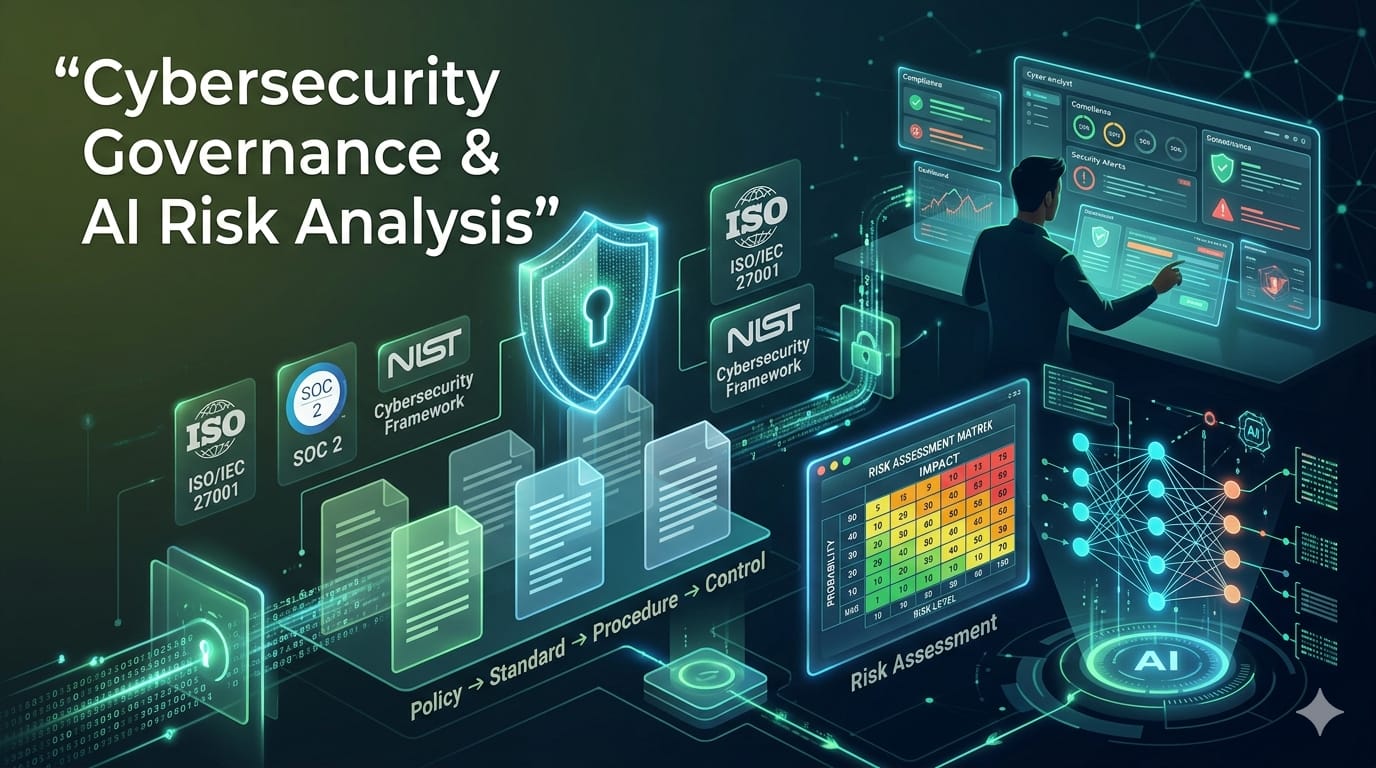
DevSecOps also supports continuous compliance by mapping controls to frameworks such as ISO 27001, SOC 2, NIST Secure Software Development Framework (SSDF), and PCI-DSS. Instead of preparing for annual audits, organizations generate audit evidence automatically through pipeline logs and security reports.
This transformation reduces compliance overhead and strengthens governance oversight.
DevSecOps and Enterprise Risk Management
A mature DevSecOps program integrates with Enterprise Risk Management (ERM) structures. Security vulnerabilities are not merely technical flaws; they represent quantifiable business risks.
DevSecOps pipelines generate risk data that can feed into organizational risk registers. Vulnerability severity scores, remediation timelines, and exposure trends provide measurable indicators of cyber risk posture.
Risk quantification models such as CVSS scoring or likelihood-impact matrices enable prioritization aligned with business objectives. Executive dashboards translate technical findings into strategic insights for CISOs and risk committees.
By aligning DevSecOps with ERM, organizations elevate security from operational function to strategic governance mechanism.
DevSecOps Metrics and KPIs
Measurement is essential to evaluate DevSecOps maturity and effectiveness. Key performance indicators include Mean Time to Detect (MTTD), Mean Time to Remediate (MTTR), vulnerability escape rate, and percentage of builds passing security gates.
Organizations may also track critical vulnerabilities per release, compliance score indices, and long-term risk reduction trends. These metrics provide executive visibility and enable data-driven decision-making.
Without measurable KPIs, DevSecOps initiatives risk becoming tool-driven rather than outcome-driven.
DevSecOps Maturity Levels
Organizations typically evolve through progressive maturity levels. Initial stages rely on manual testing and reactive patching. Intermediate levels integrate automated scanning tools into CI/CD pipelines. Advanced stages implement policy-driven enforcement, automated compliance reporting, and risk-based vulnerability prioritization.
At the highest maturity level, organizations leverage artificial intelligence for predictive analytics and autonomous remediation. Continuous threat modeling and real-time risk dashboards enable proactive security management.
Maturity progression reflects the shift from tool adoption to governance integration and risk optimization.
Implementation Challenges
Despite its advantages, DevSecOps adoption presents challenges. Cultural resistance may arise when development teams perceive security as a barrier to velocity. Tool fragmentation can create operational complexity. False positives from automated scanners may reduce trust in security findings.
Skill gaps in secure coding and pipeline configuration can delay implementation. Executive sponsorship is essential to align organizational priorities and allocate resources effectively.
Successful DevSecOps programs require training, cross-functional collaboration, and clearly defined governance structures.
Emerging Trends in DevSecOps
The future of DevSecOps is increasingly driven by artificial intelligence and automation. AI-based vulnerability prioritization reduces false positives and focuses remediation efforts on high-impact risks. Autonomous remediation workflows automatically patch or isolate vulnerabilities without manual intervention.
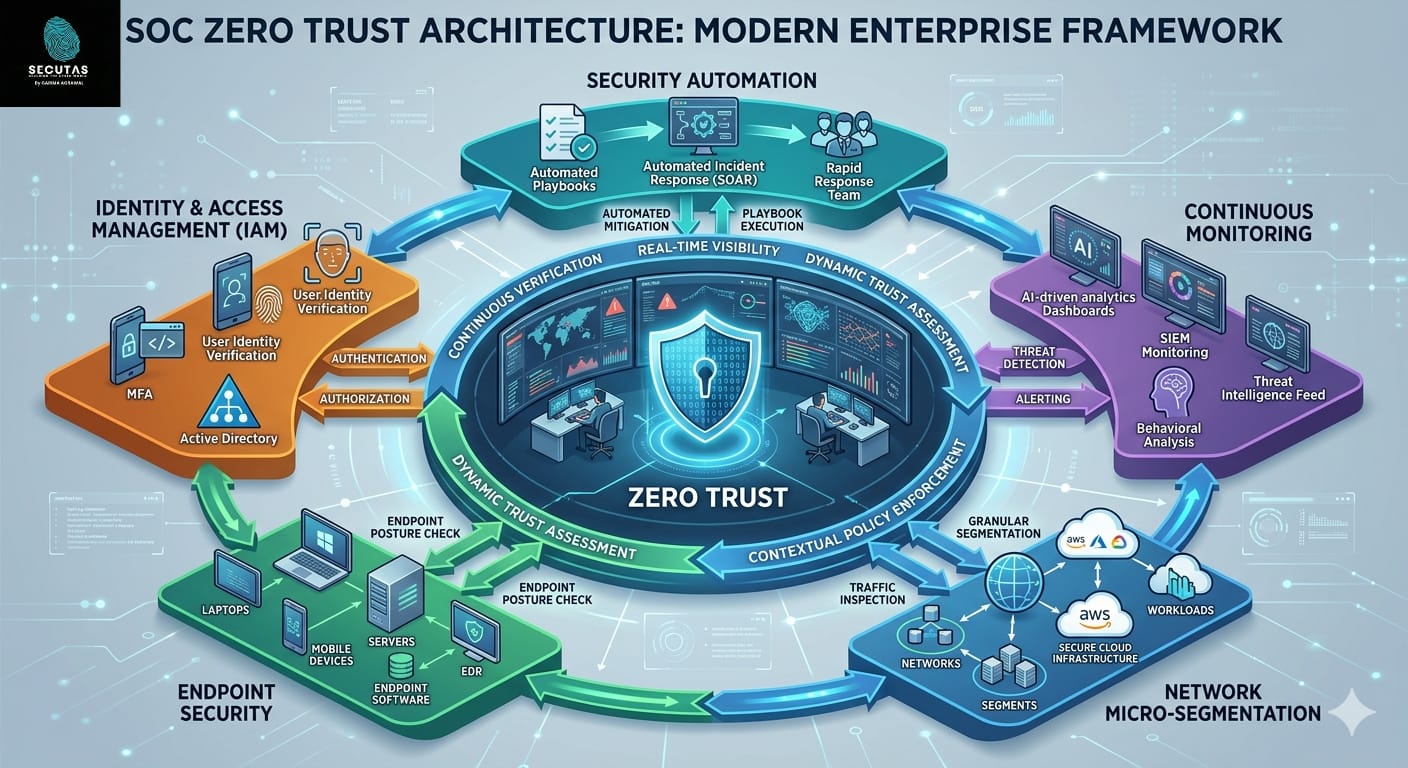
DevSecOps practices are expanding to secure AI/ML pipelines and model governance. Predictive analytics enable organizations to anticipate risk trends rather than respond reactively. Zero Trust architectures are influencing pipeline security by enforcing identity-based access controls throughout development environments.
These advancements signal the continued evolution of secure software engineering.
Conclusion
DevSecOps represents a structural transformation in cybersecurity and software engineering. By embedding automated security controls, governance enforcement, and risk management into CI/CD pipelines, organizations achieve continuous security validation and compliance readiness.
It is not merely a collection of tools but a governance-aligned framework that integrates technical controls with strategic risk oversight. Organizations that implement mature DevSecOps models benefit from faster secure releases, reduced breach probability, lower remediation costs, and stronger regulatory posture.
In an era defined by digital acceleration and escalating cyber threats, DevSecOps is foundational to secure and resilient software delivery.
Leave a Reply